



Why Writing a Clear Spec Sheet Matters
In procurement, a glove’s price tells only part of the story. True value depends on fit-for-purpose performance — not just compliance certificates.
A clear, detailed specification sheet (spec sheet) helps ensure consistent quality, fewer disputes, and easier supplier comparisons.
Professional buyers who source from audited Nitrile Glove Manufacturers know that a good spec sheet prevents costly misunderstandings between production and application teams.
Medical (Exam) vs. Industrial Nitrile Gloves — Key Differences
| Feature | Medical (Exam) Nitrile Gloves | Industrial Nitrile Gloves |
|---|---|---|
| Primary Use | Patient care, clinical exams, laboratory | Manufacturing, automotive, cleaning |
| Regulations | ASTM D6319, EN455, FDA 510(k) | EN374, EN388, ISO 374-5 |
| AQL (Acceptable Quality Level) | ≤ 1.5 (medical grade) | ≤ 4.0 (industrial grade) |
| Thickness | 3–4 mil | 5–8 mil |
| Texture | Smooth or micro-textured | Fully textured or diamond grip |
| Surface Finish | Chlorinated or polymer-coated | Textured for wet/oily grip |
| Packaging | 100 pcs/box, sterile or non-sterile | 100 pcs/bag or bulk cartons |
| Certification | CE, ISO 13485, FDA | CE, ISO 9001 |
| Price | Slightly higher due to quality control | Lower, optimized for durability |
Each specification detail affects comfort, performance, and total cost of ownership.
Hospitals prioritize tactile sensitivity and sterility, while factories emphasize durability and chemical protection.
Step-by-Step: How to Draft a Reliable Glove Spec Sheet
1️⃣ Define the End Application
Be specific. “Medical use” is too broad — specify “non-sterile exam glove for patient care” or “industrial glove for mechanical assembly.”
The clearer the purpose, the easier it is for the manufacturer to match the formulation.
2️⃣ Specify Physical Parameters
Include measurable data:
-
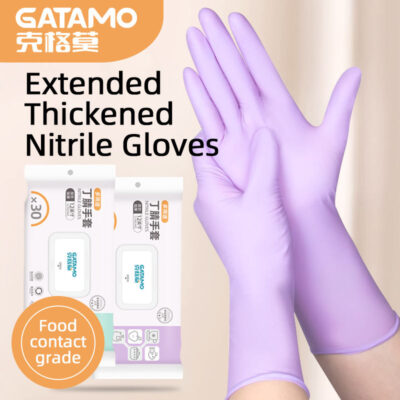
Length: 240mm (standard) or 300mm (extended cuff)
-
Thickness: 0.08–0.12mm (palm), 0.10–0.15mm (finger)
-
Tensile Strength: ≥14 MPa (medical), ≥18 MPa (industrial)
-
Elongation at Break: ≥500%
-
Color: Blue / Black / Custom Pantone
-
Powder Content: ≤2 mg/glove
Reliable Medical Nitrile Glove Manufacturers and Industrial Nitrile Gloves Manufacturers can provide full test reports to verify these parameters.
3️⃣ Define Material Composition
Confirm that the glove is made from synthetic nitrile butadiene rubber (NBR) and free from natural latex proteins to avoid allergic reactions.
If applicable, specify accelerator-free formulations for sensitive users.
4️⃣ Add Regulatory References
Cite relevant standards and certification requirements:
-
ASTM D6319 (medical)
-
EN455 parts 1–4 (freedom from holes, strength, biological safety)
-
EN374 (chemical protection for industrial)
-
ISO 13485 (medical QMS) or ISO 9001 (industrial)
5️⃣ Include Performance Attributes
Outline expected performance criteria:
-
Grip type (smooth, micro-textured, or diamond grip)
-
Chemical resistance (list chemicals if known)
-
Food contact safety (for mixed-use environments)
-
Color-coded sizing (S–XL)
-
Packaging requirements (retail box, bulk, or sterile pouch)
Testing Methods to Include
| Property | Test Method | Target Range |
|---|---|---|
| Freedom from Holes | Water Leak Test (ASTM D5151) | Pass |
| Tensile Strength | ASTM D412 / EN455-2 | ≥14 MPa |
| Elongation at Break | ASTM D412 | ≥500% |
| Thickness Measurement | ASTM D3767 | ±0.02mm tolerance |
| Aging Test | 70°C for 166 hrs | No brittleness or odor |
Suppliers should submit lot-based test reports to confirm every shipment meets these standards.
The Hidden Cost of Vague Specifications
Poorly written specs cause:
🚫 Rejected shipments due to missing data
🚫 Mismatched glove performance (too thin or too stiff)
🚫 Regulatory non-compliance
🚫 Customer complaints and brand damage
A detailed spec sheet prevents these by aligning factory QA and client expectations before production begins.
Common Procurement Pitfalls to Avoid
❌ Copying specs from unrelated glove types
❌ Ignoring tensile data and elongation properties
❌ Failing to define thickness by section (finger/palm)
❌ Over-specifying beyond real-world needs (increasing cost)
❌ Missing AQL or certification clauses
Industrial buyers should note that chemical resistance ≠ medical safety, and vice versa. Always match glove type to actual usage.
Example: Spec Summary for Dual-Use Buyers
| Item | Specification |
|---|---|
| Material | 100% NBR (Nitrile Butadiene Rubber) |
| Color | Blue |
| Thickness | 0.10mm (finger), 0.08mm (palm) |
| Length | 240mm |
| Tensile Strength | ≥16 MPa |
| AQL | 1.5 (Medical) or 4.0 (Industrial) |
| Texture | Micro-textured fingertip |
| Packaging | 100 pcs/box, 10 boxes/carton |
| Certification | CE, EN455, EN374, ISO 13485 |
This layout ensures any buyer or factory inspector can immediately confirm compliance.
Key Takeaways
✅ Clearly define glove usage and performance requirements.
✅ Reference relevant ASTM/EN/ISO standards.
✅ Specify measurable data for thickness, strength, and AQL.
✅ Match medical vs. industrial grade to application risk.
✅ Collaborate with certified glove manufacturers for full QA documentation.
A strong spec sheet bridges the gap between purchasing, production, and compliance — ensuring every glove delivered performs exactly as promised.